Whorled Milkweed
Whorled Milkweed (Asclepias verticillata)
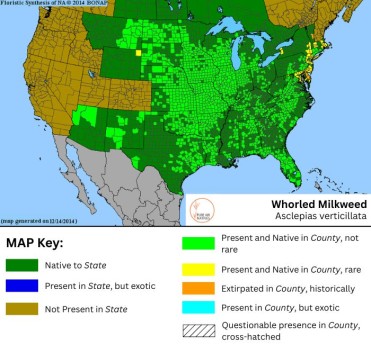
Range: Asclepias verticillata is native to much of central and eastern North America, from southern Canada to northern Mexico, and from the Atlantic coast west to the Rocky Mountains. The species is most abundant in prairie openings, native grasslands, roadsides, and disturbed areas.
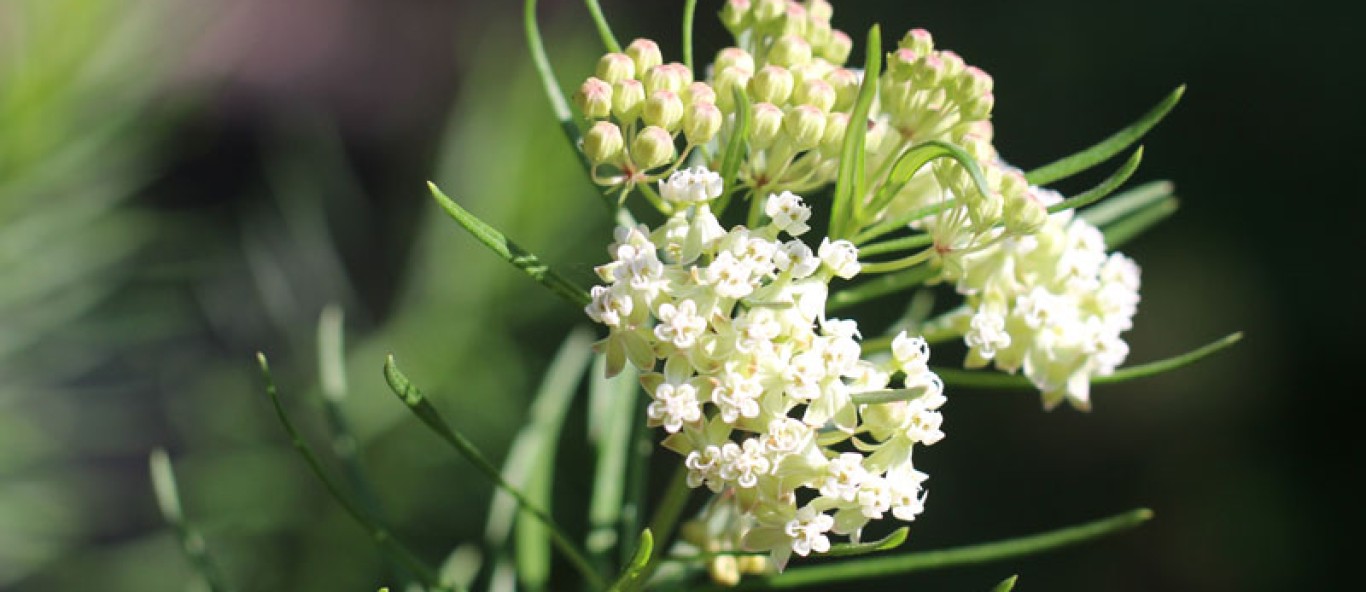
Description & Impact: Whorled milkweed is a slender perennial that typically grows 1–3 feet tall. The stems are round, medium green to yellow-green, and mostly unbranched, except near the top. Its narrow leaves are arranged in whorls of 3–7 around the stem, giving the plant a feathery appearance. From late spring through early fall, it produces clusters of 5–20 small, white to greenish-white flowers (that may have purple tips) in rounded umbels at the upper third of the stem. Each flower follows the classic milkweed structure with five petals, hoods, and sepals. The flowers attract a variety of pollinators including bees, butterflies, and wasps, and is an important host plant for Monarch, Queen, and Soldier butterflies, providing food for their caterpillars despite its toxic milky latex sap. As a pioneer species, it establishes in open, sunny areas before being shaded by taller plants.
Plant Medical History: Whorled milkweed has a documented history of use in traditional Native American medicine, with applications spanning respiratory, digestive, and reproductive health. Some used it to treat snakebites. Others found that is increased breast milk production in nursing mothers. The powdered roots could be made into an infusion to treat diarrhea, especially in children. The sap could be applied to warts, rashes, and ringworm due to antiviral and antifungal properties.
Cultivation & Garden Use: It grows in USDA zones 3a-9a, in either full sun or partial shade. It can adapt to grow in well-drained, sandy, loamy, or rocky soils and can tolerate dry conditions. The plant produces smooth, narrow seed pods in fall, which split open to release silky, wind-dispersed seeds. It also spreads vegetatively via rhizomes, forming dense patches over time. It is known to be deer resistant. Its flowers supply nectar for a wide range of pollinators, supporting biodiversity in naturalized landscapes, wildflower meadows, and pollinator gardens.