Heath Aster
Heath Aster (Symphyotrichum ericoides)
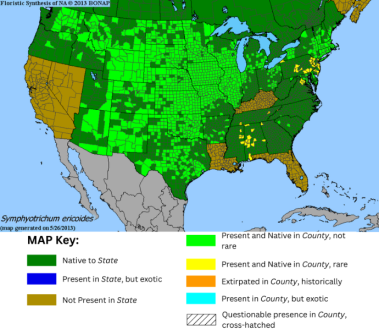
Range: Symphyotrichum ericoides is a native perennial in the Asteraceae (sunflower) family that is widespread across much of central and eastern North America, thriving in both high-quality native habitats and disturbed sites.
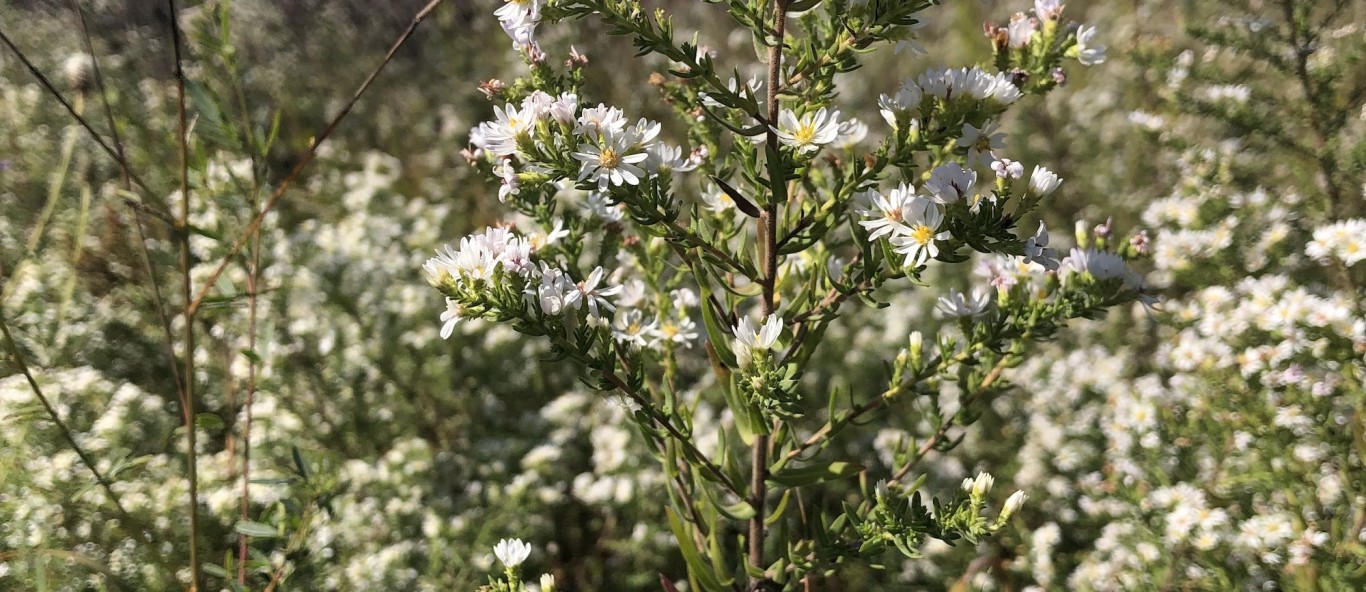
Description & Impact: They typically grow 1–3 feet tall, forming broad, bushy clumps 1–1.5 feet wide. Their stems are erect, often branched, with a fine pubescence; lower stems may turn brown as the plant matures. Their leaves are alternate, narrow to lance-shaped, dark green, with smooth margins. The flowers are delicate and tiny (⅛–¼ inch across), white to pale lavender with yellow centers, arranged in dense panicles. A single plant can produce over 1,000 flower heads. They bloom late summer to mid-fall, often continuing into October or November in mild years. As one of the last native wildflowers to bloom, it provides critical nectar and pollen for migrating and overwintering pollinators such as bees (honeybees, bumblebees, solitary bees), butterflies (pearl crescent, silvery checkerspot), moths, skippers, flies, and wasps.
Plant Medical History: The Meskwaki used smoke or steam from the plant in smudging ceremonies to help bring an ill or collapsed person back to consciousness. Flowers were used for coughs, colds, and general respiratory infections, often prepared as teas or infusions. The plant was also employed as a mild carminative, anti-spasmodic, and intestinal astringent to ease gas, cramps, and mild diarrhea.
Cultivation & Garden Use: The heath aster grows in USDA Zones 3–10, preferably in full sun. It tolerates dry, gravelly, clay, and nutrient-poor soils and can be moderately drought-tolerant once established. The heath aster self-seeds readily and can spread via rhizomes. Planting this species offers a critical late-season nectar source for butterflies, bees, and moths, and especially supports migrating pollinators. Plan to watch for aster yellows disease with this plant. Deer and rabbits may also browse the seedlings of this plant.