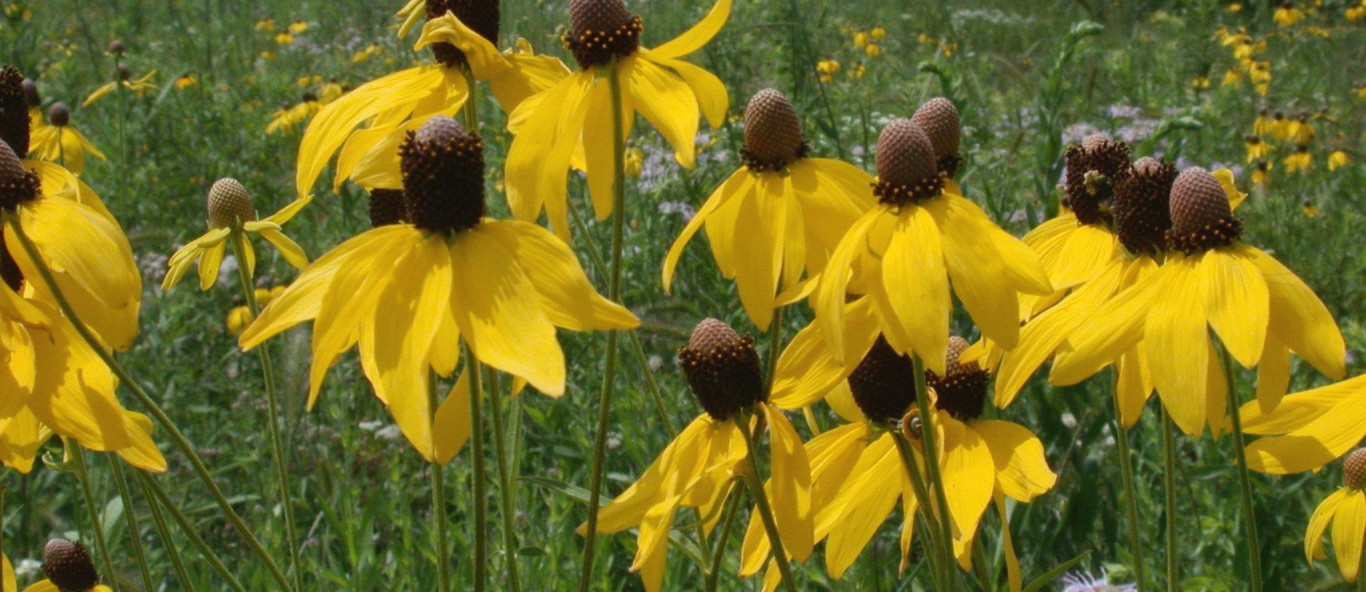
Grey-headed Coneflower
Grey-headed Coneflower (Ratibida pinnata)
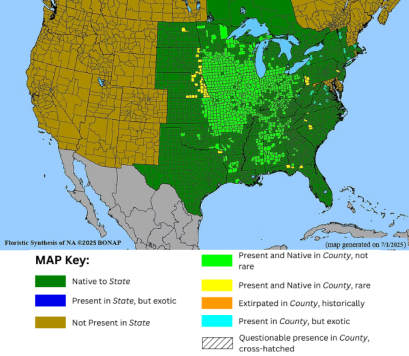
Range: Ratibida pinnata is a native perennial of central and eastern North America, extending from Ontario in Canada through much of the United States east of the Rocky Mountains. Its habitat preferences within its range include prairies, dry woods, savannas, open woodlands, and roadsides.
Description & Impact: This native North American perennial species stands 3–5 feet tall with drooping yellow ray flowers with a gray to brown central cone. The leaves are pinnately divided into 3–7 narrow segments and are rough‑textured and hairy. They typically bloom May - September. This towering flower attracts bees, butterflies, and other pollinators. It is a host plant for the silvery checkerspot butterfly. The seed heads feed birds such as goldfinches in fall.
Plant Medical History: Various Indigenous cultures prepared infusions from the plant’s roots and aerial parts to help with colds, flu, and other respiratory ailments. The gray-headed coneflower was also used topically. Poultices or washes made from the plant were applied to soothe skin irritations, minor cuts, and abrasions, promoting tissue regeneration.
Cultivation & Garden Use: The grey-headed coneflower grows in USDA zones 3-9. This plant can tolerate full sun to partial shade. It can adapt to clay or loam, medium‑dry moisture, preferably well‑drained soil types. Once establishes it is relatively low-maintenance and drought-tolerant. This plant will self-seed, dropping seeds nearby when it topples over in fall, or when seeds are carried to new locations by birds. The plant also develops a fibrous root system that gradually increases in size over time. This slow outward growth enlarges the existing plant rather than producing many scattered new individuals. It’s best suited for mass plantings in prairies, wildflower meadows, or erosion control areas, where its spread is natural and beneficial. To limit the spread, plan to divide the plant every few years.