Meadow Blazing Star
Meadow Blazing Star (Liatris ligulistylis)
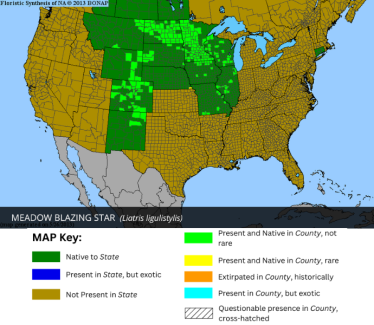
Range: Liatris ligulistylis is a native perennial of North America, with its core range stretching from Wisconsin to North Dakota into the southern parts of Canda. It is most often found in mesic prairies, open savannas, and moist depressions within drier grasslands.
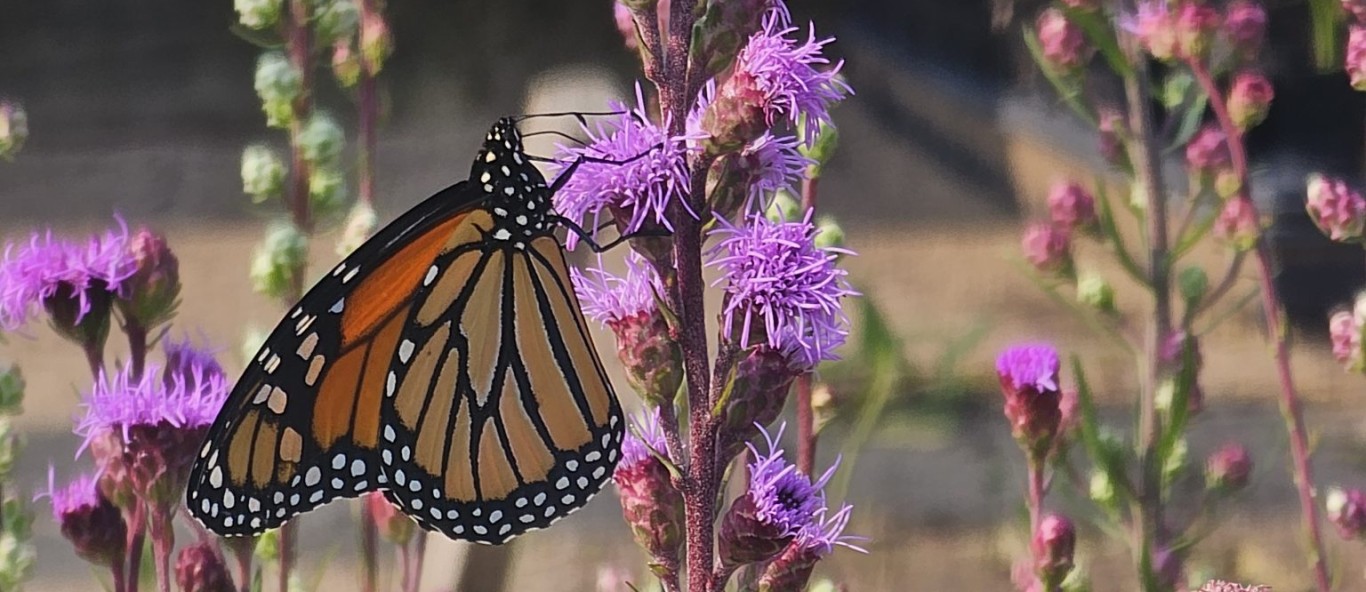
Description & Impact: Meadow blazing star typically grows 3–5 feet tall. The leaves are narrow, lance-shaped, with white midribs. Their basal leaves are numerous and alternate up the stem. It displays upright, flowering stalks topped with crimson buds that open into fluffy, thistle-like flower heads in rose-purple to magenta hues. This species blooms from the top down. Each flower head sits on its own individual stalk, giving the flowers a more open, airy look compared to Prairie Blazing Star. This plant offers high-quality nectar and pollen that attracts monarchs, swallowtails, bees, and hummingbirds. Since this plant blooms August-September, it is frequently visited by migrating species.
Plant Medical History: Meadow blazing star was used by Indigenous tribes for its anti-inflammatory and antiseptic properties, often applied to wounds or as a poultice. Some traditional preparations of the plant were used to ease coughs or support respiratory health. In other traditions, the plant was also used to help with digestive discomfort.
Cultivation & Garden Use: This plant grows in zones 3-8. Full sun is essential for meadow blazing star, as partial shade can cause stunted, crooked growth. It thrives in well-drained, slightly acidic to neutral soils. Avoid planting in heavy clay or overwatering to prevent root rot. It can self-seed well or be propagated by dividing the underground corm. Planting in groups of 10+ will help ensure a continuous bloom period. Rabbits and other critters will eat the seeds if spread on top of the ground; dig the seeds in a bit to protect them. Meadow blazing star's Its late-season blooms and height make it a standout in butterfly gardens and prairie-style landscapes. It will become a butterfly magnet, especially for the migratory species!