Black-eyed Susan
Black-eyed Susan (Rudbeckia hirta)
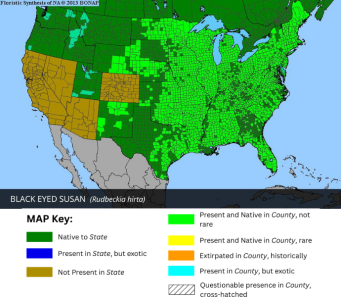
Range: Rudbeckia hirta is native to most of the eastern and central United States and parts of Canada, with a range extending from the Atlantic coast to the Rocky Mountains. It is primarily found in open woodlands, prairies, fields, and roadsides across the Eastern, Central, and Intermountain United States.
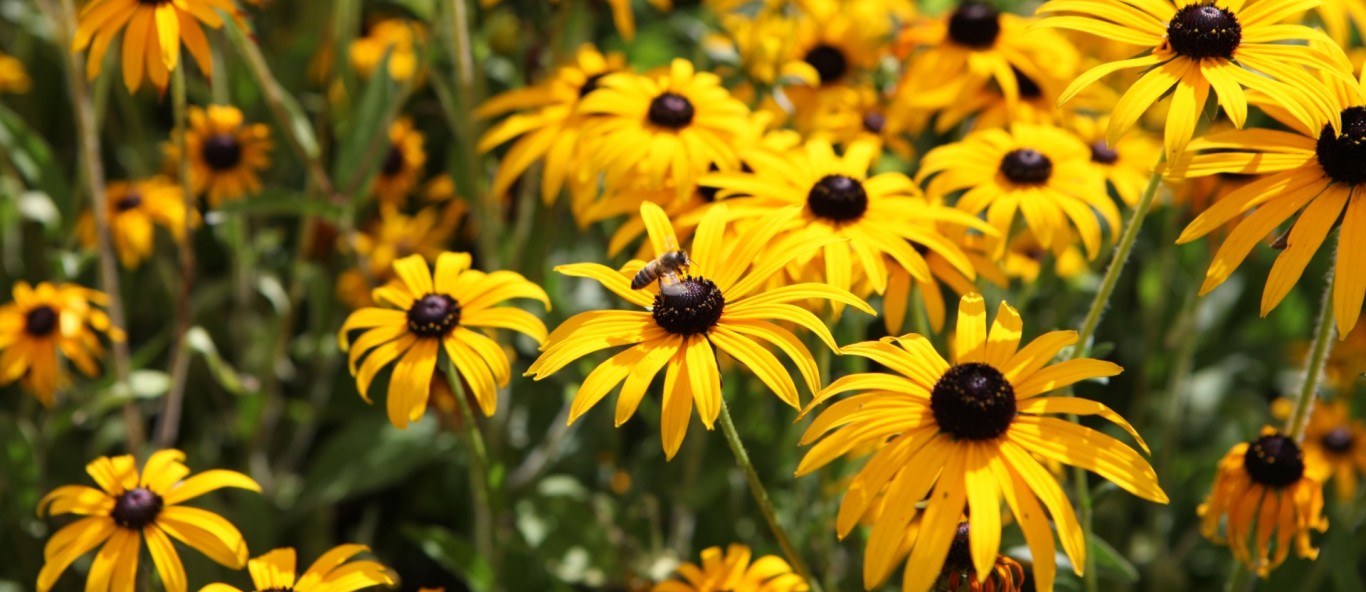
Description & Impact: The black-eyed Susan reaches heights of 1 to 3 feet with rough, hairy stems and large ovate leaves that narrow toward the top. The plant produces solitary flower heads 2 to 2.5 inches in diameter, featuring 8 to 20 bright yellow or orange ray flowers surrounding a dark brown or black conical center composed of numerous tubular disk flowers. The bloom from summer through early fall. They are attractive to pollinators such as bees and butterflies and serve as a larval host for certain butterfly species, like the Silvery Checkerspot, Bordered Patch and the Emerald skipper. Birds, including quail and wild turkeys, feed on the seeds, while deer may graze on the basal leaves in winter
Plant Medical History: The roots of the black-eyed Susan, which are closely related to echinacea, contain polysaccharides that stimulate the immune system. Herbalists often prepare a root decoction in the early stages of colds or flu to support the body’s defenses. The plant’s anti-inflammatory and antimicrobial properties made it useful in poultices for treating wounds, cuts, and skin infections. Chewing the leaves or using them in decoctions was believed to expel parasitic worm, and it was also applied topically to snake bites to reduce swelling and inflammation.
Cultivation & Garden Use: The black-eyed Susan grows in USDA zones 3–9 and requires minimal care once established. It prefers moist, well-drained soil; tolerates clay, loam, and poor soil. It needs full sun for the best flowering but tolerates partial shade. This plant produces seeds that spread naturally, making it ideal for wildflower gardens. It is generally pest-resistant but watch for powdery mildew in humid conditions with poor air circulation. It can grow well in landscape borders, prairie mixes, butterfly gardens, and containers.