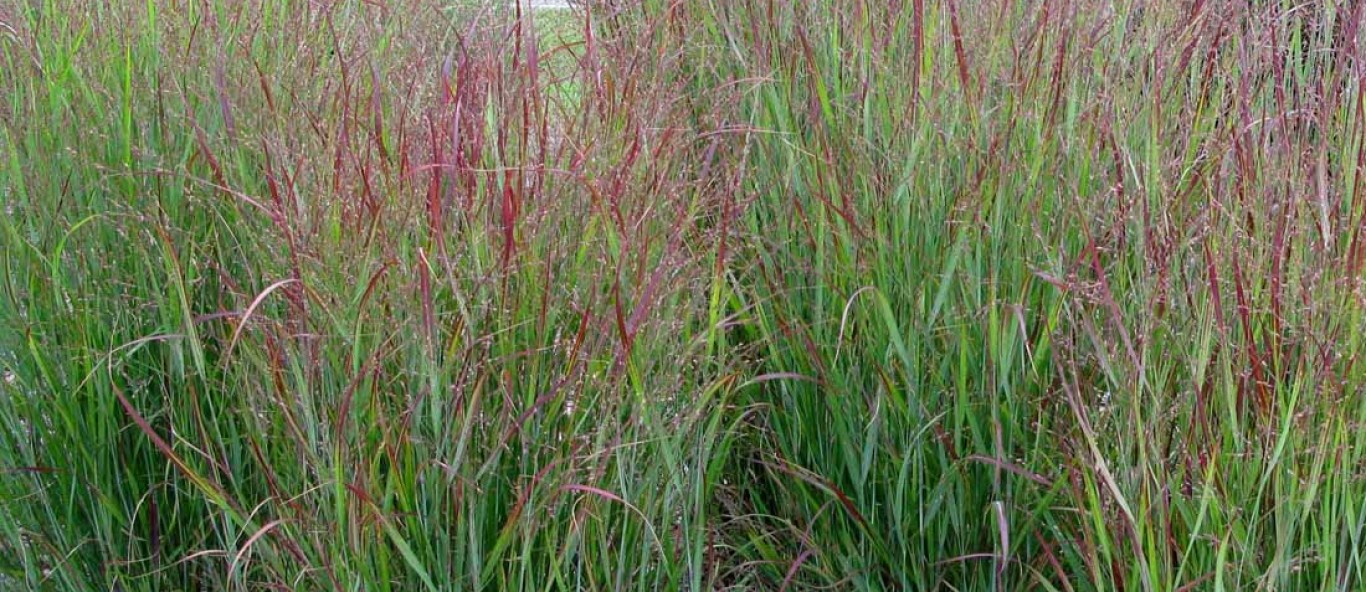
Switch Grass
Switch Grass (Panicum virgatum)
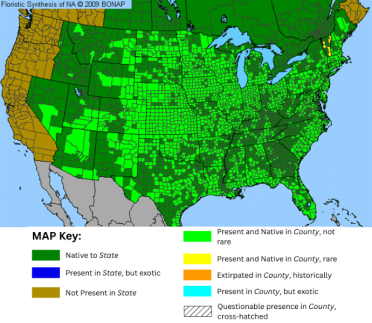
Range: Panicum virgatum is native to much of North America, from Canada to Central America, with a broad distribution across the United States and parts of Mexico. It grows in dry or moist prairies, bluffs, stream banks, open woods, and seasonally damp open areas.
Description & Impact: Switch grass is widely used for prairie restoration, biofuel production, erosion control, and ornamental landscaping. It is a warm season grass that grows 3 - 6 feet tall, with narrow leaves that are 1 - 3 long, blue‑green to green, with a prominent midrib. Its flowers are finely textured, pink‑tinged branched panicles appearing in mid‑summer. It has deep fibrous roots reaching 6 - 10 ft, contributing to drought tolerance and soil stabilization. This plant provides food and cover for birds and small mammals. It is also a larval host for several skippers, moths and leafhoppers.
Plant Medical History: While not a primary medicinal plant in historical herbal medicine, switch grass may have had indirect health benefits. As a forage crop, it could have been consumed by livestock, which in turn provided milk, meat, and other products with nutritional value to humans. By improving soil structure and carbon sequestration, it may have supported the growth of other plants used medicinally. In Native American traditions, many grasses were used symbolically or ritually, though specific switchgrass uses in this context are not well-documented.
Cultivation & Garden Use: Switch grass grows in USDA zones 4 - 9, thriving in full sun to partial shade. It handles drought, wet soils, clay, and sandy soils, and is resistant to most pests and diseases. It's deep taproot (6–10 ft) provides drought tolerance and erosion control. It spreads via seed and by shallow rhizome growth. As it is an aggressive spreader, plan to divide the plant every few years if necessary. Switch grass is a cornerstone species of the tallgrass prairie, offering carbon sequestration, water filtration, and habitat support.