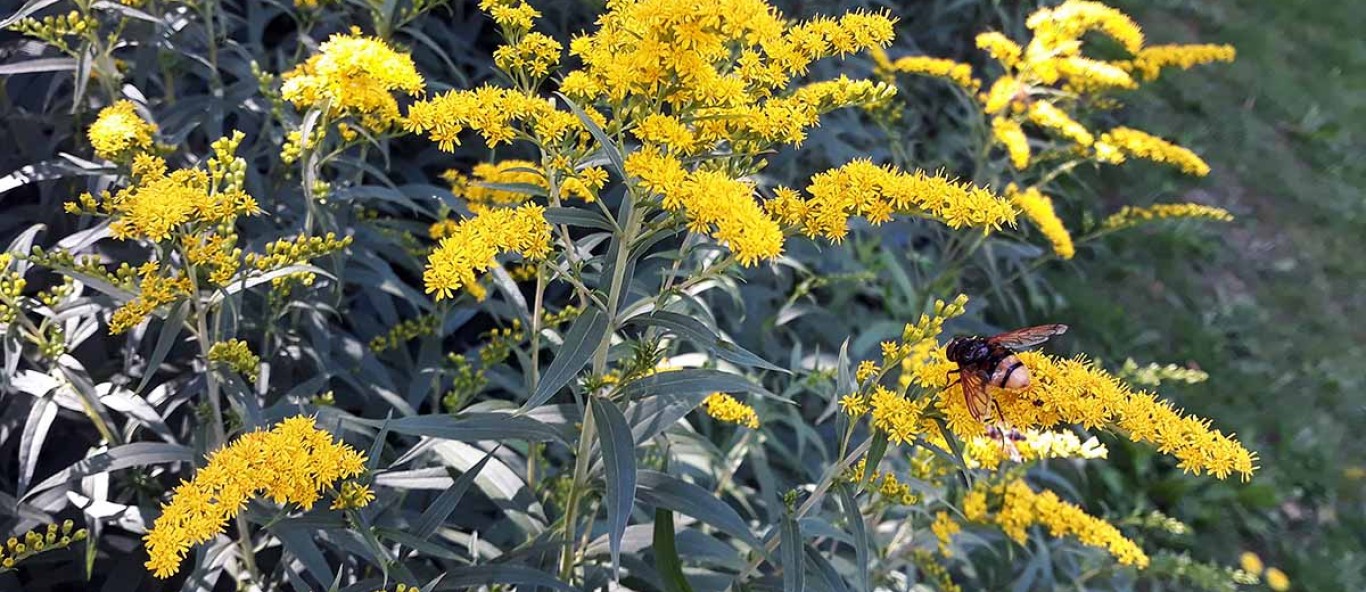
Old Field Goldenrod
Old Field Goldenrod (Solidago nemoralis)
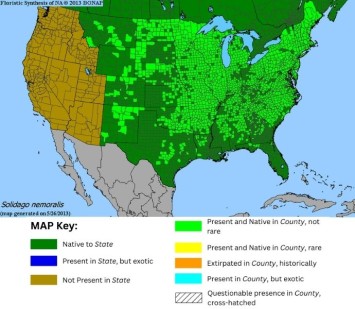
Range: Solidago nemoralis is native to dry open woodlands, prairies, savannas, and fields east of the Rocky Mountains in the USA and adjacent Canada. It is found across much of the Great Plains and eastern United States.
Description & Impact: One of the smaller goldenrods, it grows (8–40 inches) tall. There are 1 to 6 erect stems, sometimes more. The stems are reddish to gray-green and have lines of short, white hairs. The lower leaves are up to 4 inches long and the blades are borne on winged petioles. Leaves on the upper half of the stem are narrower and shorter and lack petioles. The flower head contains 5 to 11 yellow ray florets each a few millimeters long surrounding up to 10 yellow disc florets. Flowering occurs in late summer and fall. The flowers have a variety of insect pollinators, including honey bees, carpenter bees, sweat bees, plasterer bees, wasps, butterflies, moths, beetles and flies. Insects such as the goldenrod scarlet plant bug, leaf-footed bugs, and various caterpillars feed on the foliage. The American goldfinch feeds on the fruits. Several insect species use the old field goldenrod as a host to lay eggs, inducing galls to form in the stem of the plant.
Plant Medical History: Native American identified this perennial plant’s therapeutic properties and used it to treat insect bites, lower fever, treat chest pain, sore throat and even toothache. Other therapeutic benefits are used to reinforce the renal system and treat certain urinary tract infections. Goldenrod's curative properties for colds and pulmonary disorders were also discovered during the Middle Ages in Europe.
Cultivation & Garden Use: Old field goldenrod grows in zones 3 - 9, and prefers full sun and average, dry to medium, slightly acidic, well-drained soils. This is a rhizomatous, spreading, somewhat weedy plant that can colonize an area by creeping rhizomes and self-seeding. Although there are no serious insect or disease problems associated with it, it can be susceptible to rust, anthracnose, powdery mildew and leaf spot. Because of its aggressive nature, be prepared to divide the plantings every few years to prevent it from taking over an area. It offers a late-season nectar and pollen source for pollinator, making it a good addition to a native plant garden.