Nodding Onion
Nodding Onion (Allium cernuum)
Range: Allium cernuum is a native perennial bulb that grows across much of North America, from New York to British Columbia, and south through mountainous and cooler regions down to Arizona and North Georgia. This species favors rocky soils and well-drained sites, commonly found in glades, bluff edges, open woods, dry meadows, and prairies.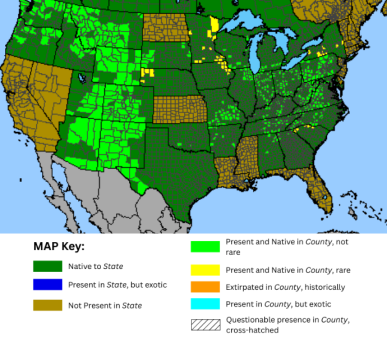
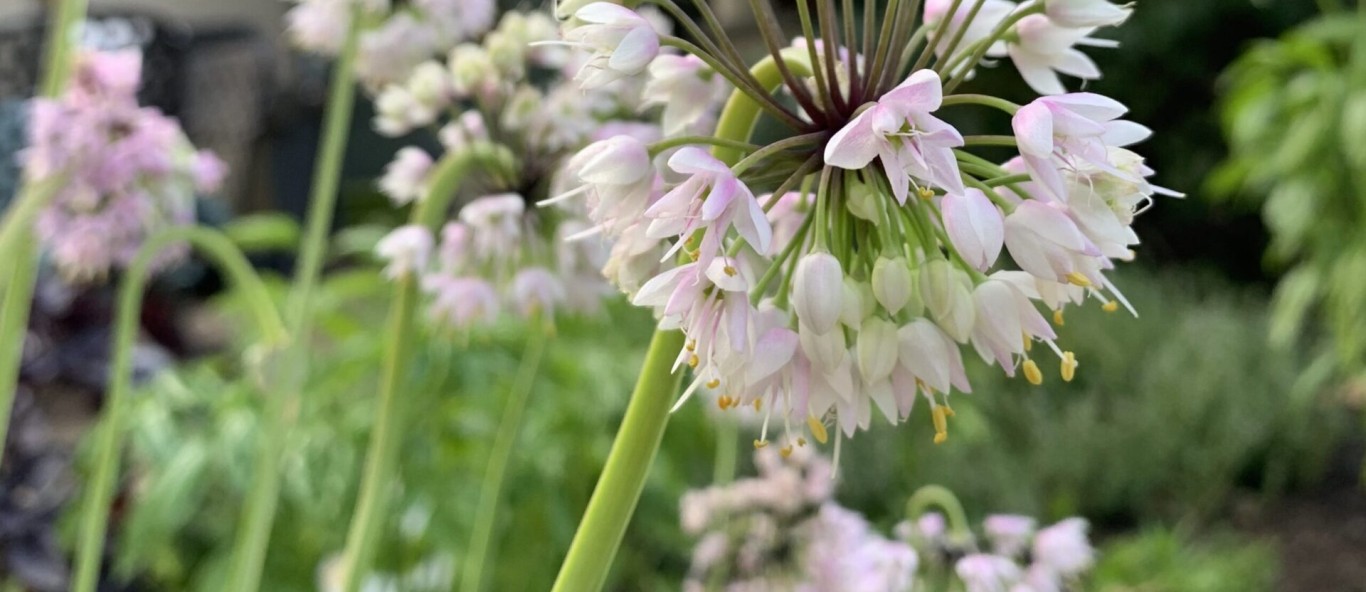
Description & Impact: The plant grows 1–2 feet tall from a conical, unsheathed bulb, producing grass-like, linear leaves that are medium green, smooth, and slightly keeled. The foliage is solid and flattened, with parallel veins. Nodding onion produces nodding clusters of bell-shaped flowers in pink, white, or light lavender hues, each about 1/4–1/2 inch across. The flowers are arranged in downward-facing clusters, giving the plant its common name. Blooming typically occurs June–August, lasting 3–4 weeks. The flowers are attractive to bees, bumblebees, butterflies, moths, and other pollinators. All parts of the plant have a distinct onion-like smell; the bulbs and foliage are edible but bitter, so they are rarely eaten.
Plant Medical History: The bulbs were pounded into a poultice and applied to the chest to ease croup, bronchitis, colds, and deep coughs. Boiled bulbs were taken as a tea or decoction to reduce fevers and support recovery from illness. The infusion also calmed stomachs, eased colic in children, and soothed cramps. Fresh juice was used to help break down kidney stones, reduce excess body water, and ease urinary tract troubles. Fresh juice was applied as a gargle to soothe sore throats and reduce pain. The juice could be applied to the skin to repel biting insects.
Cultivation & Garden Use: Nodding onion grows in USDA zones 4-9. It grows well in full sun to partial shade, in well-drained, sandy loam or rocky soils. It also can tolerate dry, sandy, or shallow soil conditions. Its water needs are low, and it can become drought-tolerant once established. After flowering, the plant develops seed capsules that split open to release small black seeds. It can spread by bulb offsets and via these seeds, though it is easiest to propagate by dividing bulblets. It is valued in rock gardens, pollinator gardens, native plantings, and cottage gardens for its ornamental flowers and wildlife value. It supports pollinators and some butterfly and moth species. Because of its onion-like taste and smell, it is naturally deer resistant.