Butterfly Weed
Butterfly Weed (Asclepias tuberosa)
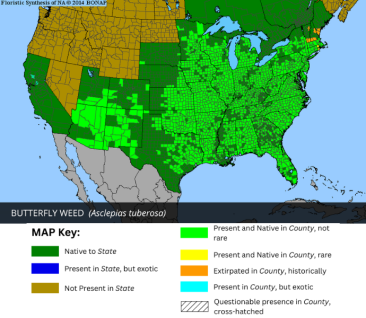
Range: Asclepias tuberosa is native across most of the United States, parts of southern Canada, and northern Mexico, thriving in a wide variety of habitats. It has one of the most extensive ranges of any North American wildflower, and can be found in dry, sunny, open habitats such as prairies, grasslands, sandy coastal plains, pine barrens, limestone glades, and rocky mountain slopes.
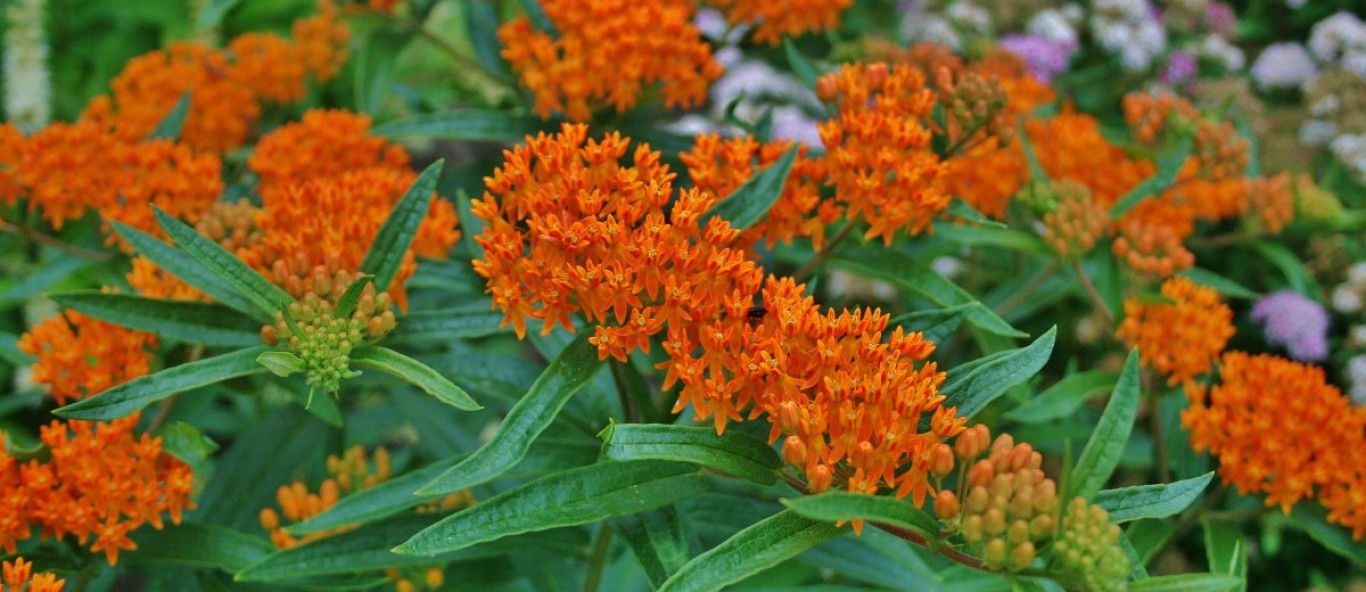
Description & Impact: Butterfly weed is a bushy, upright perennial typically growing 1 to 3 feet tall with several stems arising from a deep, woody taproot. The stems are straight and hairy, and unlike many milkweeds, it produces clear, watery sap instead of milky latex. Leaves are alternate, simple, narrow, lance-shaped, and dark green, usually 3–12 cm long and 2–3 cm wide. The plant produces flat-topped clusters of flowers from late spring through summer, with colors ranging from bright orange to brick red. Each flower has five downward-pointing petals topped by a crown of five erect hoods, characteristic of milkweeds. Butterfly weed is a nectar-rich plant that attracts monarch butterflies, bees, hummingbirds, and other pollinators. Its leaves serve as food for monarch caterpillars.
Plant Medical History: Indigenous tribes sometimes ate the raw root for bronchial and pulmonary troubles, while others used it to induce vomiting. The root was also chewed to help with swelling and rashes, and it was applied to wounds, sometimes chewed and blown into them. Other reported uses included treating diarrhea, colic, sore throat, and even as a remedy for snow blindness.
Cultivation & Garden Use: Butterfly weed grows in USDA zones 3-9. It prefers full sun and well-drained, lean to sandy or gravelly soils. The plant tolerates poor fertility and does not require fertilization; in fact, rich soil can reduce flowering and attract pests. Minimal supplemental watering is needed after establishment and the plant becomes drought-tolerant. It is best spread by seeds which form after flowering as the plant forms spindle-shaped seed pods that are 7.5–15 cm long, containing numerous brown seeds with silky white hairs that disperse by wind. The deep taproot makes it difficult to transplant once established. The plant may take 2-3 years to mature and flower once planted. This plant is adaptable to many types of habitats, and is widely used in native gardens, prairie plantings, and pollinator habitats, often paired with ornamental grasses, asters, or coneflowers.