Daisy Fleabane
Daisy Fleabane (Erigeron annuus)
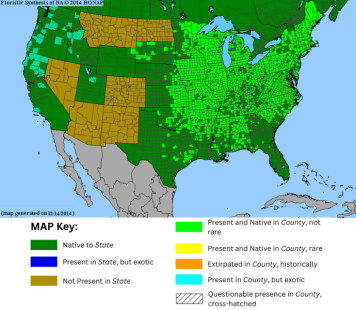
Range: Erigeron annuus is native to North America and Central America. It is widespread in most of the United States, especially in the eastern part of its range. As a native pioneer species, it often colonizes disturbed areas such as pastures, abandoned fields, vacant lots, roadsides, railways, and waste areas.
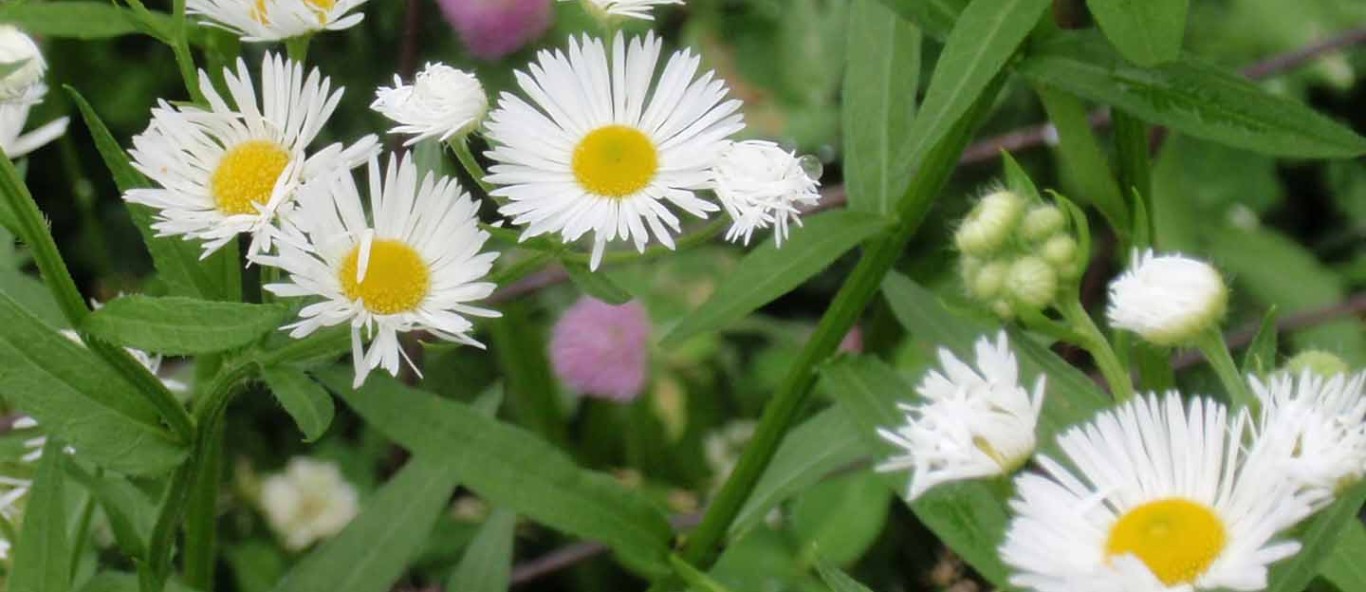
Description & Impact: The daisy fleabane grows 1–3 feet tall, often forming tufted or clump-like growth from basal rosettes, with one or more flowering stems emerging from the base. The plant's stems are green, and sparsely hairy. The leaves are alternate, simple, and toothed or cleft, especially at the base, with upper leaves sometimes toothed at tips. It produces white to pale lavender ray florets (petal-like) with yellow centers, arranged in open clusters at the stem tips. Each flower head is about 0.5–0.75 inches in diameter, with 40–120 slender, threadlike rays. The blooms may be seen spring through fall, with some plants blooming continuously. The flowers are visited by a variety of pollinators, including bees, flies, wasps, and small butterflies. It is also the host plant for the Lynx Flower Moth (Schinia lynx), which lays its eggs on the plant and whose larvae feed on the seeds.
Plant Medical History: Historically, Indigenous peoples and early European settlers prepared fleabane as teas, tinctures, poultices, and balms from leaves, seeds, or flowering tops. Common uses for this plant include the treatment of urinary tract infections, hemorrhage control, digestive disorders, respiratory ailments, menstrual irregularities, and insect bites/skin sores.
Cultivation & Garden Use: Daisy fleabane grows perennially in UDSA zones 2–8, in well-drained soil, though it tolerates clay and poor soils. The plant grows in both full sun and partial shade and becomes drought-resistant once established. The pests and diseases to watch out for are aphids, spider mites, possible leaf spot, powdery mildew, and rust. This plant support biodiversity and beneficial insects, attracting bees, butterflies, and moths. This is a great addition to a new garden, as it often perseveres as a pioneer species after disturbances and outcompetes invasive weeds.