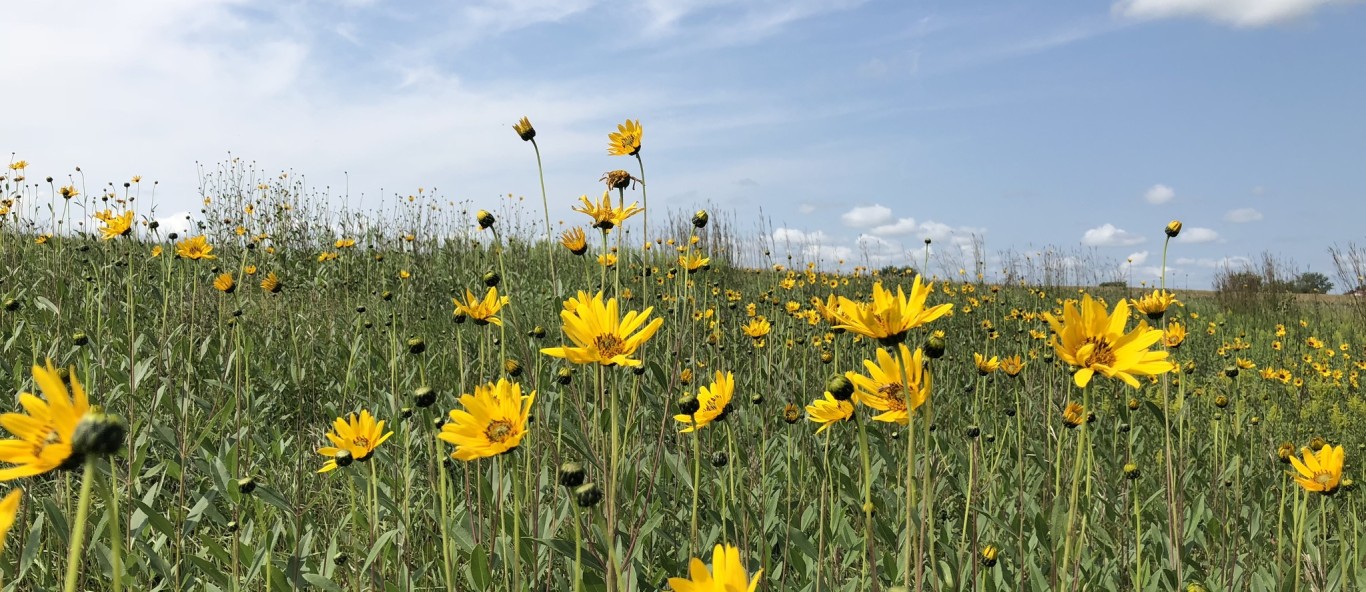
Stiff Sunflower
Stiff Sunflower (Helianthus pauciflorus)
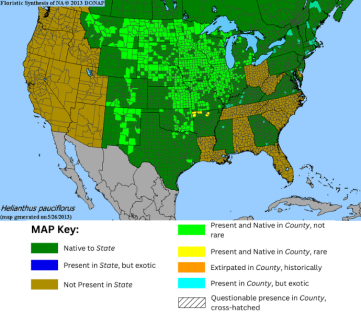
Range: Helianthus pauciflorus is native to the prairies and grasslands of the Central and Northern USA and Canada. It is found in mesic to dry black soil prairies, gravel prairies, sand prairies, hill prairies, limestone glades, and railroad corridors.
Description & Impact: The stiff sunflower can grow 1.5-6.5 feet tall, with stiff stems and leaves that are mostly basal; lanceolate to ovate; rough and hairy. Flowers are a golden yellow, with a diameter of 5–10 cm, and display 10–20 bright yellow ray florets. The flowers bloom mid‑summer to fall and attract bees, butterflies, beetles, and other pollinators. The seeds provide food for birds such as goldfinches.
Plant Medical History: Stiff sunflower has a documented history of traditional and folk medicinal use by the Indigenous peoples of North America. The leaves were used to make a strong tea intended to help reduce fevers. Adding honey to the leaf tea was believed to help clear mucus and ease respiratory discomfort. Stems were reportedly used in remedies aimed at treating malaria.
Cultivation & Garden Use: Stiff sunflowers grow in USDA zones 3-7. It thrives in full sun and well‑drained, neutral to slightly alkaline soil, though it also tolerates poor, sandy, or rocky soils. This plant spreads by self-seeding as well as underground rhizome growth, creating large stands of golden blooms across a landscape. It is very useful in restoration and erosion control due to its rhizomatous spreading growth pattern. Plan to cut this plant back in spring, deadhead for neatness and divide as needed, as it may spread aggressively. Helianthus pauciflorus is a resilient, pollinator‑friendly prairie perennial valued in both natural ecosystems and large garden landscapes.