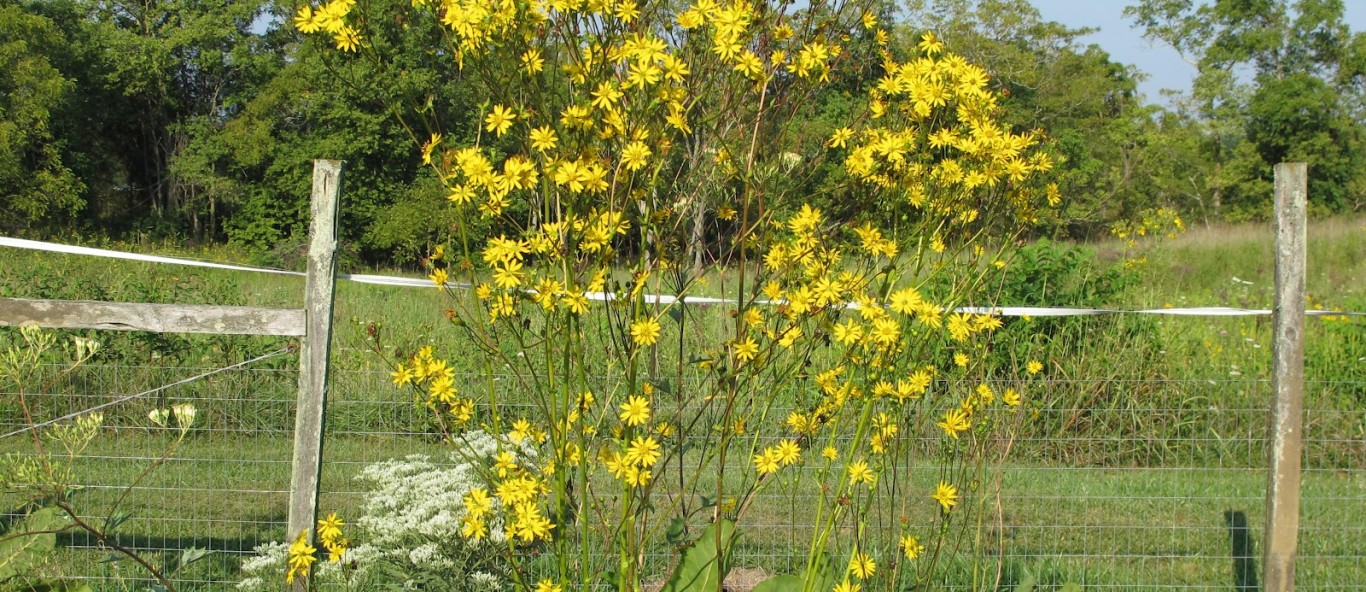
Prairie Dock
Prairie Dock (Silphium terebinthinaceum)
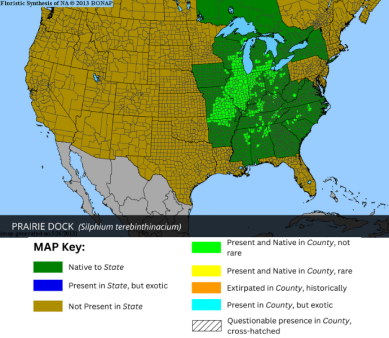
Range: Silphium terebinthinaceum is a native herbaceous perennial in the Asteraceae family, found across much of central and eastern North America. It thrives in prairie and prairie-like habitats, including black soil prairies, gravel prairies, hill prairies, savannas, seeps and limestone glades, and roadside and railroad prairie remnants.
Description & Impact: From the base, one or more flowering stalks rise 3–10 feet tall, bearing yellow sunflower-like flowerheads about 2–2½ inches across. Each head has 15–30 ray florets with pointed tips and numerous disk florets. Blooming typically occurs late summer to early fall, lasting about a month per plant. The plant forms a vase-like rosette of large, spade-shaped basal leaves, up to 18 inches long and 12 inches wide, with a sandpapery texture and coarse, toothed margins. These leaves are oriented vertically in a north–south direction to maximize sunlight and minimize water loss. The plant's flowers support pollinators such as long-tongued bees, honeybees, bumblebees, miner bees, bee flies, and ruby-throated hummingbirds.
Plant Medical History: Tea brewed from the roots of the prairie dock have a variety of medical applications in Native American culture. It was brewed in a tea to relieve lung bleeding, to minimize menstruation bleeding, and to induce vomiting. Other root tea uses include a treatment for liver issues, fever, and enlarged spleen. The smoke from this plant has also been used as a treatment for congestion and rheumatism.
Cultivation & Garden Use: This plant grows well in USDA zones 4-8, thrives in full sun and tolerates a variety of soils, including average, medium, well-drained, and even poor soils, making it adaptable to many garden and prairie settings. This plant may take 3 or more years to flower, but once established, it will flower annually. It has a very deep taproot that can penetrate up to 12–14 feet to access water, making it drought-tolerant and resilient to grazing or mowing. Prairie dock is suitable for native plant gardens, prairies, wildflower gardens, and naturalized areas. The plant is relatively pest and disease-resistant once established.